Rottweiler
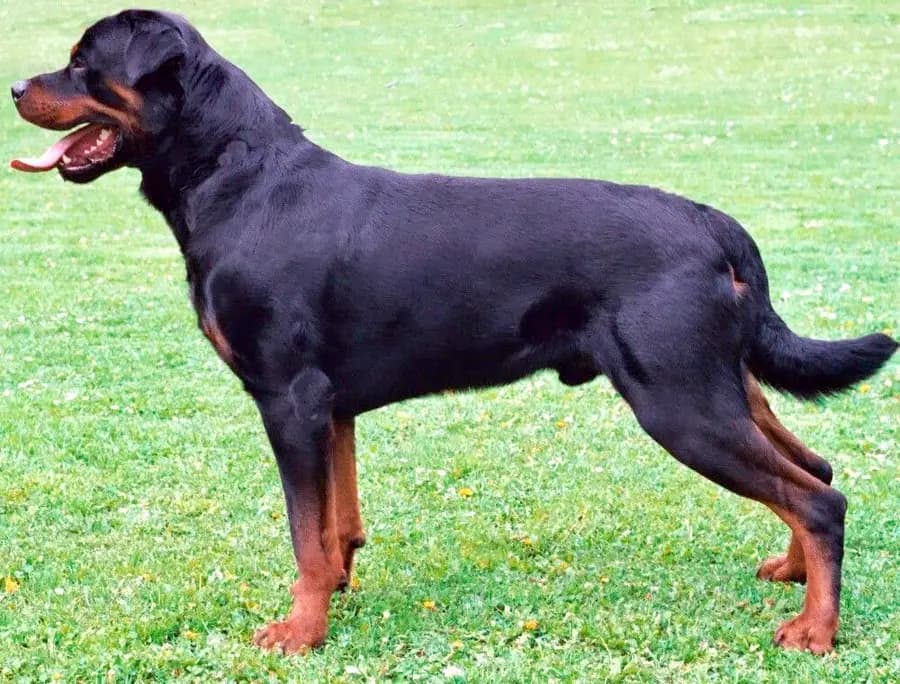
Working Group
AKC Recognized
📏 Size
Large
⚖️ Weight
36 - 61 kg
🕐 Lifespan
9 - 10 years
🌍 Origin
Germany
🐕 Shedding
Moderate
✂️ Grooming
Monthly
Energy Level
moderate
Exercise: About 1 hr a day
A guide for a healthy adult. Puppies, older dogs and flat-faced breeds in the heat need less.
Good to know
- Drovers and guardians: descended from Roman cattle dogs and later used to drive and guard herds in the German town of Rottweil, they still have strong guarding instincts.
- Aloof outside, silly at home: often reserved with strangers, they can be playful clowns with their family and some still try to climb into laps.
- Train and socialize early: intelligent and eager to please but sometimes stubborn, they need consistent, fair training from puppyhood, and rough play is best avoided.
- Seasonal shedding: the short, coarse coat sheds moderately most of the year and more heavily in spring and fall, with weekly brushing the rest of the time.
- People dogs: they don't do well isolated from their family and enjoy having work to do, such as carting, tracking, herding or obedience.
Getting out with a Rottweiler
Daily walks and some play keep them content. A mix of park time and easy trails suits them.
Common health considerations
Inherited conditions to ask your vet about
- Hip/elbow dysplasia
- Osteosarcoma (bone cancer)
- Aortic stenosis (heart)
- Cruciate ligament rupture
Common issues
- Joint issues
- Cancer
- Heart disease
- Obesity
Bloat (GDV) risk: high. A swollen belly with retching but nothing coming up is an emergency: go to a vet straight away.
Not every Rottweiler will have these. Good breeders screen for inherited conditions, and your vet can advise on testing and check-ups.
Keep your dog's records in the Health VaultExplore more breeds in the Working group
Browse Working Breeds